



















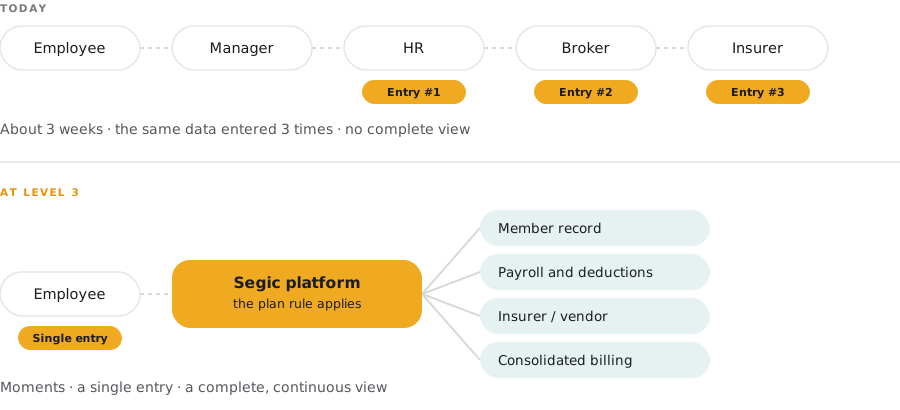
An employee gets married. He tells his manager, who passes it along to human resources. Someone opens a form, fills it out, sends it to the broker, who forwards it to the insurer. Three weeks later, his spouse still doesn’t appear on the file, the payroll deduction hasn’t been adjusted, and he calls HR for the third time. That is exactly what automating group benefits administration prevents.
Nobody did their job badly. The problem isn’t human — it’s structural. The information changed hands five times, it was entered three times, and at no point did anyone hold a complete view of the file.
The journey of a single change
This kind of friction — invisible in the budget, highly visible in the daily life of a team — is what is pushing a growing number of Canadian organizations to rethink how their group benefits program is administered. But most “automation” projects stop well short of producing a real gain. Understanding why means distinguishing between three very different levels of efficiency.
The real cost of manual processes appears in no budget
The cost of a manual process never shows up on an invoice. It is spread across four places nobody measures.

Your HR team’s time
Spent on data entry, follow-ups and approvals rather than on total rewards, retention or developing people.
Processing time
Which turns a ten-minute change into a three-week file, and good news into a source of irritation.

Data quality
Which degrades with every re-entry and ends up producing discrepancies between internal records, payroll and the insurer’s registry.

The member experience
Members judge the value of their group benefits program by how easily they can use it — not by what their employer spends on it.
That last point deserves a pause. An employer can invest heavily in coverage and earn very little recognition for it if the enrolment path is confusing, if confirmations are slow, or if an employee has to call to get a simple answer. Perceived value is built in the experience, not in the contract.
What the Canadian market data says
Two recent sets of data frame the situation well.
of HR teams’ time is still spent on administrative and operational tasks.
of the small and mid-sized businesses surveyed have a fully integrated HR management system.
of Canadian employers rank controlling benefits costs as their top priority.
Surveys by Folks (April 2026, more than 450 HR professionals across Canada) and by MBWL International / Normandin Beaudry as reported by Benefits Canada (June 2026, more than 200 Canadian employers). The Folks survey was commissioned by a vendor and its detailed methodology is not published: read it as a directional indicator, not a precise measure. Full sources at the end of this article.
The second most cited challenge among employers, at 41 %, isn’t financial: it’s employees’ understanding and appreciation of their benefits. Nearly eight organizations in ten still operate with technology silos.
Read together, these findings are instructive. Employers face real cost pressure, but their second concern is experiential. And the team that should be tackling both spends most of its time on tasks that contribute to neither.
Automating group benefits administration: the three levels
This is where most projects go off the rails. People talk about automation and deliver digitization. The three levels below help pinpoint where an organization actually stands — and where the gain actually is.
The operational maturity ladder
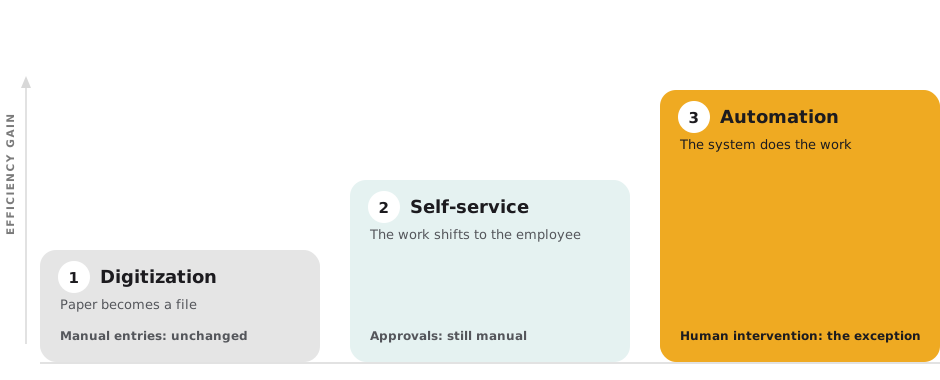
Digitization: paper becomes a file
The paper form becomes a PDF. The filing cabinet becomes a shared folder. Email replaces the fax machine.
What improves: traceability, archiving, a little processing time.
What doesn’t change: the number of manual entries. A human being still reads information in one place to retype it in another. The work hasn’t disappeared — it changed format.
Many organizations believe they have automated their administration when in fact they stopped here. It is the most common level and the most disappointing one, because the cost of change was paid without the workload going down.
Self-service: the work shifts
A portal goes live. Members update their own contact information, review their coverage, download their card, submit their claims. Administrators get a dashboard of enrolments and pending changes.
What improves: a great deal. Repetitive questions drop, turnaround shortens, the member experience improves markedly, and data is entered once, by the person who knows it best.
What remains: the approvals. Every change still waits for someone’s sign-off, billing still requires reconciliation, and updates still have to be pushed out to payroll and to vendors.
Self-service is real progress, but it shifts part of the work to the employee without eliminating the coordination work. This is where most well-equipped organizations stand today.
Straight-through processing with no human intervention
At the third level, an eligible change is processed end to end without anyone having to step in. The program rules are configured in the system: who is eligible, from what date, at what coverage level, with what cost sharing, under what limits. When an event occurs, the system applies the rule, updates the record, adjusts the deduction, notifies the parties involved and feeds billing.
Human intervention becomes the exception rather than the rule: it is reserved for cases that fall outside the configured framework — which is precisely where an administrator’s or a broker’s judgment carries value.
What improves: turnaround drops from weeks to moments; data is consistent across systems because it is entered only once; billing reconciliation stops being a monthly detective exercise; and the HR capacity freed up is significant, not marginal.
What it requires: program rules that can genuinely be codified, established connections to HR and payroll systems, and a single source of truth for enrolment data. This is a structural undertaking, not a configuration exercise.
Six questions to place your organization
This assessment takes fifteen minutes and gives an honest read on the real operational maturity of a group benefits program.
- How many times is the same employee data entered between the moment a change is reported and the moment it is reflected everywhere — HR record, payroll, benefits, vendors?
- How much time passes between an enrolment and its confirmation to the member? Between a life event and its effect on payroll?
- Is billing reconciliation a verification or an investigation? How many hours does it take each month?
- What happens if your lead administrator is away for two weeks? If the answer is “it waits,” the process depends on a person, not on a system.
- What share of the questions you receive from employees could they have answered themselves in a portal?
- How many different vendors does the team have to coordinate, and how many separate portals must it visit to get a complete picture?
The answers almost always place an organization a level lower than it assumed.
Three prerequisites that are routinely underestimated
Automation almost never fails for technological reasons. It fails for three more mundane ones.
Ambiguous program rules. A system cannot automatically apply a rule that doesn’t clearly exist. Many programs contain grey areas that have historically been settled case by case. Clarifying them is a prerequisite, and it is often the single most useful step in the whole project — regardless of which technology is chosen.
Insufficient data quality at the outset. Automating a process fed by inaccurate data only propagates errors faster. A clean-up of enrolment data always precedes a good deployment.
No designated source of truth. If an employee’s data lives in four systems and nobody has decided which one is authoritative, no automation will hold. That decision is a governance decision, not a software choice.
What the third level changes for each stakeholder

For the HR team
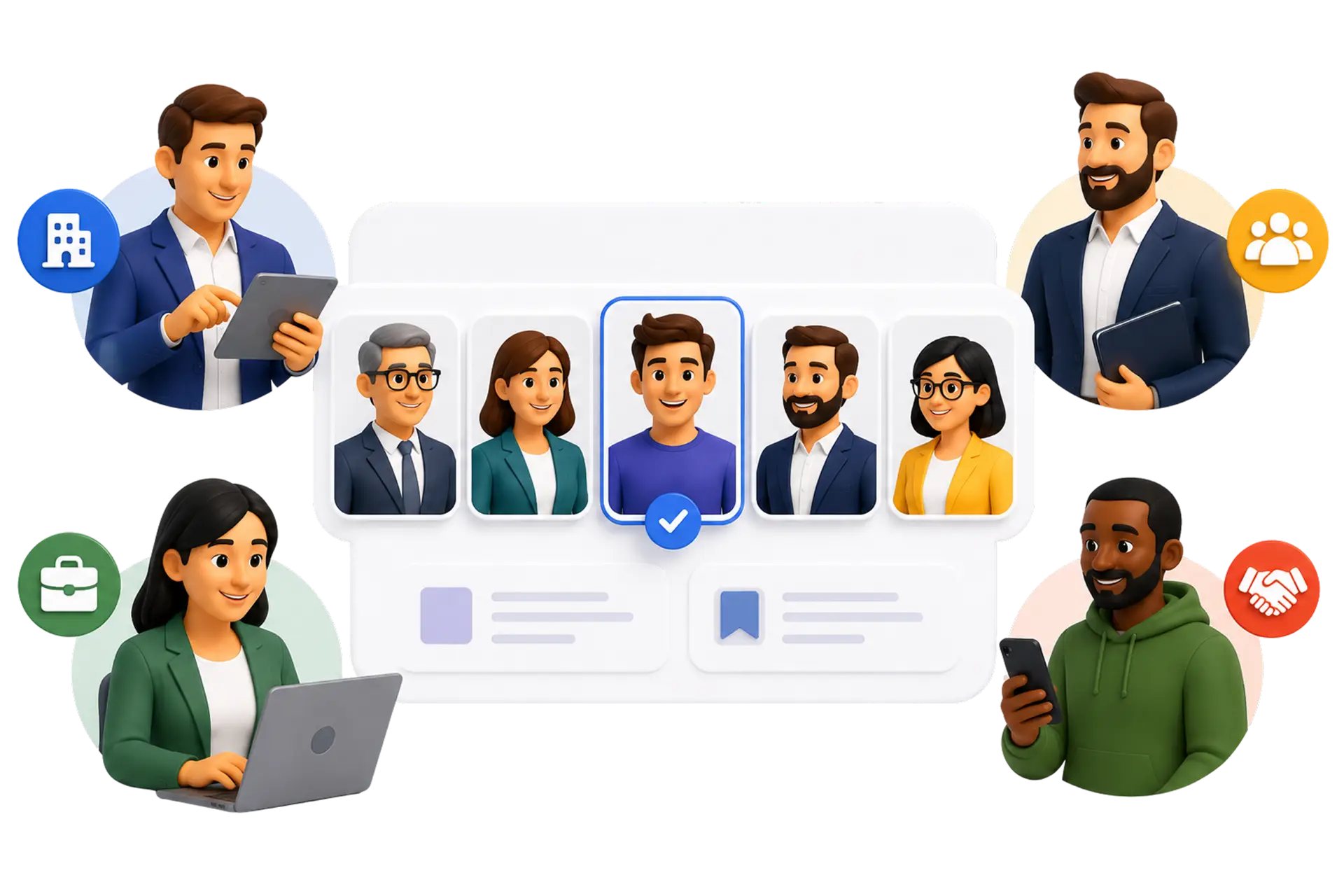
The workload shifts from processing to advising. The time recovered isn’t theoretical: it goes back into total rewards design, retention and program communication — exactly the levers Canadian employers identify as priorities.

For finance
Predictability improves. Consolidated billing and automated reconciliation reduce discrepancies, shorten month-end and make the program’s real cost visible by division, by class and by product. Controlling a cost starts with measuring it correctly.
For members
The experience becomes self-directed: guided self-enrolment, electronic confirmations, mobile access to coverage and claims, management of optional products without an intermediary. It is the most direct lever on understanding and appreciation of the program.

For the broker
Contrary to a widespread fear, automation doesn’t reduce the advisor’s role — it refocuses it. Freed from administrative coordination, the broker spends time on program design, data analysis and total rewards strategy. The client relationship remains theirs, with better tools to sustain it.
The Segic approach
Segic is a Canadian technology company building independent infrastructure for the administration of group benefits programs. It brings together three elements which, when separate, account for much of the friction described above.

The administration platform
Program rules, structures, classes and parameters are centralized in one place.

TPA/TPP services
Administration, payments, reimbursements and operational coordination are taken care of.

Benefits Marketplace
Complementary products available without multiplying agreements, portals and invoices.
In practice, this means self-service and self-enrolment portals for members and administrators, integrations with HR, payroll and HRIS systems through APIs or automated file transfer, consolidated billing, and dashboards that give the plan sponsor real visibility into the program. The platform is designed to work with multiple insurers and multiple vendors, so that an organization’s processes and data stay consistent even when its environment changes.
One point of positioning deserves to be explicit: Segic does not replace the broker. The client relationship belongs to them. Segic provides the platform, the administrative capacity and the data that let them serve that client better.
Start with the most expensive point of friction

No organization goes from level 1 to level 3 in a single step, and there is no need to. The most effective path is to identify the process that consumes the most time for the least value — usually enrolment and life-event updates, or the monthly billing reconciliation — and automate it completely before moving to the next one.
What matters is knowing where you stand. An organization that believes it has automated when it has only digitized will keep investing in the wrong fixes.
Place your program
Want to pinpoint the most expensive friction in your administration? We’ll walk through your current processes with you, and you’ll leave with a clear read on your operational maturity — whether or not you continue with us.
Sources
- Folks, 2026 State of HR Survey, more than 450 HR professionals across Canada, published April 13, 2026. Press release
- MBWL International and Normandin Beaudry, survey of more than 200 Canadian employers, as reported by Benefits Canada, June 11, 2026. Article